

No products in the cart.




Not all diamonds sparkle the same way. The shape you choose has a direct impact on how much light a diamond reflects, how it breaks that light into colour, and how it performs under different lighting conditions. If you’re searching for the best diamond shape for sparkle, the answer depends on how each cut interacts with light, and some shapes are simply engineered to do it better than others.
At A Star Diamonds, our gemologists and designers in Hatton Garden work with every major diamond shape daily, both natural and lab-grown. We see first-hand how cut geometry affects brilliance, fire, and scintillation, the three components that make a diamond look alive on someone’s hand.
Below, we’ve ranked the top five diamond shapes for sparkle based on their light performance, backed by what we consistently observe in our workshop. Whether you’re choosing a stone for a bespoke engagement ring or comparing options online, this guide will help you make a confident, informed decision.
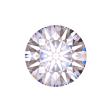
The round brilliant cut holds the top spot as the best diamond shape for sparkle, and it is not a close contest. With 57 or 58 precisely arranged facets, this cut was mathematically engineered to return the maximum amount of light back through the table, producing white brilliance, coloured fire, and sharp scintillation at the same time.
The round brilliant’s facet pattern creates a direct light return pathway that other shapes cannot replicate. Each facet angle works together to reflect light internally before sending it back to your eye, which is why rounds consistently outperform fancy shapes in brightness under every lighting condition.
Your certificate should show a table percentage between 54% and 58% and a depth between 61% and 62.5%. Look for an Excellent or Very Good cut grade on a GIA or IGI certificate, and avoid anything below Very Good, as visible light leakage becomes a real problem.
A GIA Excellent round brilliant will outperform a poorly cut round on every sparkle measure, regardless of carat size.
Rounds are highly effective at masking inclusions because their facets scatter light across the stone, so VS2 or SI1 clarity often looks eye-clean in person. For colour, grades G to I appear white once set in platinum or white gold, giving you strong sparkle without paying a premium for D to F stones.
A four or six-claw solitaire allows the most light to enter from the sides and base of the stone. Thin, tapered claws obstruct less surface area than wide or bezel settings, and cathedral shoulders lift the stone to expose it to more light sources throughout the day.
A 1ct round brilliant lab-grown diamond in a solitaire setting starts from around £1,800 at A Star Diamonds. Natural equivalents begin around £4,500 for G/VS2 quality. Rounds carry a small premium over fancy shapes due to greater rough wastage during cutting, but their consistent light performance makes them worth that difference for most buyers.
The radiant cut ranks as the strongest fancy shape for those chasing the best diamond shape for sparkle outside of a round. Its 70 facets blend round-brilliant engineering with a rectangular or square outline, producing an intense, constantly shifting light display.
Radiants use a mixed-cut facet pattern that fragments light into dozens of overlapping flashes rather than large, distinct reflections. This gives you a diamond that looks actively alive with every small movement of your hand, combining white brilliance and coloured fire simultaneously.
Aim for a length-to-width ratio between 1.20 and 1.35 for a rectangular shape, or 1.00 to 1.05 for a square outline. Keep depth between 61% and 67% and avoid anything above 70%, as excess depth traps light at the base.
A radiant with poor depth proportion will look noticeably smaller and darker than its carat weight suggests.
Some radiants display tiny, fragmented flashes (crushed ice), while others produce larger, bolder light patterns. View the stone under both spotlighting and diffused daylight before committing to a style.
Four corner prongs shield the cropped corners from chipping while keeping the stone fully open to light. A simple solitaire or halo works best here.
A 1ct radiant lab-grown diamond starts from around £1,500 at A Star Diamonds. Natural equivalents in G/VS2 quality begin near £4,000, offering strong value relative to rounds.
The princess cut is the most popular square shape for buyers seeking the best diamond shape for sparkle in a non-round outline. Its chevron-shaped facets direct light sharply through the stone, producing a bright, bold flash pattern that looks lively under most lighting conditions.
Princess cuts use diagonal chevron facets radiating from the centre, creating a cross-like light pattern visible through the table. This arrangement delivers strong white brilliance alongside reasonable fire, making it a solid alternative to rounds for anyone who prefers a square silhouette.
The four sharp corners are both a design feature and a vulnerability. A sideways knock can chip them, and poorly cut princesses show dark leakage zones in the corners when the depth proportion is off.
A depth percentage above 75% in a princess cut almost always produces visible dark zones at the corners.
Keep table percentage between 67% and 72% and depth between 68% and 74%. Your certificate should also show Excellent or Very Good symmetry, as any asymmetry in a square stone is immediately obvious to the eye.
V-shaped prongs placed at each corner protect the most fragile parts of the stone while keeping the sides fully open to light. Bezel settings conceal the corners entirely and reduce overall sparkle output in a way that is visible even to untrained eyes.
A 1ct princess cut lab-grown diamond starts from around £1,400 at A Star Diamonds. Natural equivalents in G/VS2 quality begin near £3,800, making princess cuts one of the more accessible options in this ranking.
The oval cut is the closest fancy shape to a round brilliant in raw light performance, making it a genuine contender for the best diamond shape for sparkle in an elongated outline. Its facet arrangement mirrors the round’s closely, delivering strong brilliance and fire while the elongated silhouette makes the stone appear larger than its carat weight.
Ovals borrow their facet geometry directly from the round brilliant, which keeps light return highly competitive among fancy shapes. The elongated body spreads those facets across a wider face-up surface area, so you gain perceived size alongside strong sparkle output.
Most ovals show a dark bow-tie shadow across the centre, caused by light escaping rather than reflecting back to your eye. View the stone under multiple lighting conditions and choose one where the bow-tie is faint and shifts with movement rather than sitting fixed and dark throughout.
A bow-tie that moves is acceptable; one that stays permanently dark will noticeably cut the diamond’s overall sparkle.
Target a length-to-width ratio between 1.35 and 1.50 for a well-balanced outline. Keep depth between 60% and 64% to stop light from trapping at the base of the stone.
Four or six-claw settings leave the most surface area exposed to light. Use thin, tapered claws at the tips to protect those vulnerable points without blocking the facets underneath.
A 1ct oval lab-grown diamond starts from around £1,600 at A Star Diamonds. Natural equivalents in G/VS2 quality begin near £4,200, placing ovals between princess and round brilliant pricing.
The cushion cut softens a square or rectangular outline with curved corners, lending it a vintage character that suits many ring styles. It ranks fifth here but still delivers genuine sparkle when the proportions are right, making it a strong choice if you prefer a warmer, softer light display over the sharp contrast of a princess cut.
Cushion cuts fall into two distinct styles. Standard cushion cuts produce large, chunky facets with bold, sweeping light flashes, while cushion modified brilliants fragment light into dozens of tiny reflections that look similar to a radiant. Neither version is the best diamond shape for sparkle overall, but both perform well under the right conditions.
Your choice comes down to personal preference. Chunky cushions display slower, more dramatic light patterns, while crushed-ice cushions create constant, shimmering movement across the surface. View both styles under spotlighting and natural daylight before deciding.
A crushed-ice cushion hides inclusions more effectively than a chunky cushion, making it a practical option if you want to stretch your budget at lower clarity grades.
Keep depth between 61% and 67% and table percentage between 56% and 65%. Anything above 70% depth causes the stone to face up dark and look noticeably smaller than its carat weight suggests.
Four claw prongs at the corners keep the sides fully exposed to incoming light. Adding a small halo of accent diamonds around the centre stone boosts the overall sparkle without crowding the cushion’s soft outline.
A 1ct cushion lab-grown diamond starts from around £1,350 at A Star Diamonds. Natural equivalents in G/VS2 quality begin near £3,600, making cushions the most accessible shape in this ranking.
Finding the best diamond shape for sparkle comes down to three things: cut quality, proportions, and how you set the stone. Rounds lead the ranking by a clear margin, but radiants, princesses, ovals, and cushions all deliver strong light performance when you choose the right specifications.
Your next step is to see these shapes in person before committing. No certificate or photograph fully captures how a diamond behaves under real lighting, and the difference between a well-cut and a poorly cut stone is obvious the moment you compare them side by side.
At A Star Diamonds in Hatton Garden, our gemologists will show you each shape under multiple lighting conditions, explain the certificate details that matter, and help you build a setting that works with the stone rather than against it. Book a consultation with our team and let us help you find a diamond that performs exactly the way you want it to.
The best lab grown diamond engagement ring UK buyers can find comes from a jeweller that shows you the
A 1 carat lab grown diamond is a real diamond, grown in a machine rather than mined, that weighs one
The best gold solitaire diamond engagement rings combine 18ct gold, a diamond graded for cut and clarity,
The best wedding ring engraving ideas are short, personal and still meaningful in thirty years. That
Pick up two diamonds of the same size and price, and one can look dull while the other sparkles. The
Choosing a ring that looks like it has a past is harder than it sounds. Genuine antiques are often the


Leave a comment