


No products in the cart.


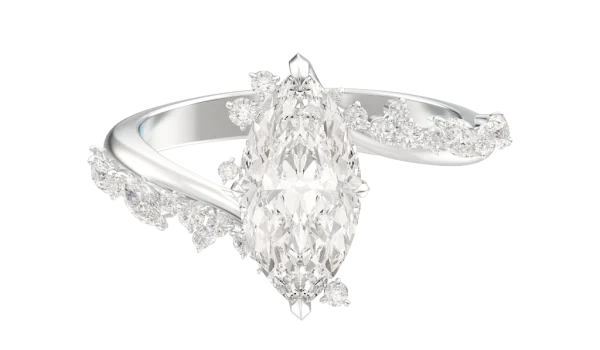
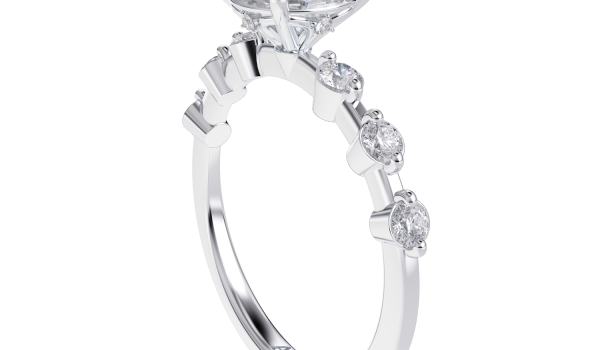
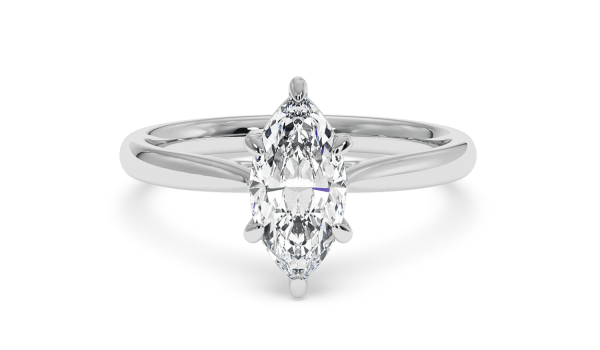
Best lab-grown diamond rings in London have become one of the most requested choices for engagement rings and jewellery across London. More buyers are choosing them for their brilliance, ethical sourcing, and letting people get a better-quality stone for their budget.
But after buying the ring, many people have different questions, like if you want it to be valued, insured, resold, or used as security for a pawnbroker’s loan, you may hear quite different numbers from different professionals, and that can be very confusing.
That’s largely because pawnbrokers, independent valuers, insurers, and jewellers use different methods to determine a diamond’s value. This guide helps you learn why the value of a ring can vary and what to check before insuring the best lab-grown diamond rings in London, UK.
Lab-grown diamonds share the same chemical structure, hardness, and brilliance as mined diamonds. The real difference is simply how they’re formed: one grows underground over billions of years, the other inside a controlled lab setting over a matter of weeks.
Lab diamond prices can change quickly because production is becoming faster and more efficient. Since lab-grown diamonds are still fairly new, there are fewer established standards to value them.
A pawnbroker, an insurer, and a jeweller each think about value differently. One consider resale risk, another consider replacement cost for insurance, and another consider retail and design value.
This is why one ring can receive three different valuations, depending on whether it’s being valued for retail, insurance, or resale. It simply depends on who is looking at the ring and why.
Pawnbrokers and professional valuers may look at the same ring, but each one values it for different reasons. Once you understand these differences, it’s easy to see why your ring gets valued differently.
| Factor | Pawnbroker | Independent Valuer |
|---|---|---|
| Purpose | Short-term lending | Valuation report |
| Risk Level | High | Low |
| Assessment Focus | Resale potential | Replacement value |
| Market Outlook | Conservative | Market-based |
| Insurance Use | Limited | Suitable |
When a pawnbroker gives a loan, the ring is their only security if the loan is not repaid. Because of this, they consider how easily they can sell the ring, they analyse the demand and the risk they would face if they had to keep it and resell it. This is why their offers are often more
cautious.
Valuers work from a different starting point. They lean on certification, diamond grading reports, current replacement costs, and the craftsmanship behind the setting; that’s why insurance companies often rely on these reports when setting up a policy.
Lab-grown diamonds are becoming more popular, but some London pawnbrokers still have concerns about them. Here’s why.
Market Insight: Caution doesn’t mean rejection. Most London pawnbrokers now accept lab diamonds; they simply tend to offer a lower loan-to-value ratio while the market settles.
Many people do not realise this difference. A pawnbroker decides how much money to offer based on how much they think the ring can be sold for. An insurance company calculates how much it would cost to replace your ring today if something happened to it. That’s why an
insurance valuation is often higher than a pawn offer.
A strong valuation is usually backed by an IGI certificate or a GIA report, your original purchase invoice, a detailed jewellery description, and a professional valuation report. Knowing how to read and verify your certification makes the whole process smoother.
Expert Tip: Lab diamond pricing can move faster than traditional diamond pricing, so it’s worth updating your valuation every few years rather than assuming the original figure still holds.
A little preparation before you contact an insurer makes the whole process faster and far less stressful.
Questions to ask:
Lab-grown diamonds do have value. The main difference is that they may not hold their value over time as compared to mined diamonds.
These measure two different things. One reflects replacement cost; the other reflects what a buyer would actually pay today.
Acceptance is growing steadily across London, and it largely comes down to a pawnbroker’s business model, local demand, and how familiar their team is with lab-grown stock.
Most insurers are happy to cover properly documented lab-grown jewellery. In most cases, the type of diamond is not the problem. “What matters is having the right paperwork to prove its value.”
“The biggest misconception about lab-grown diamonds isn’t their value—it’s assuming that resale, insurance, and retail values should all be the same.”
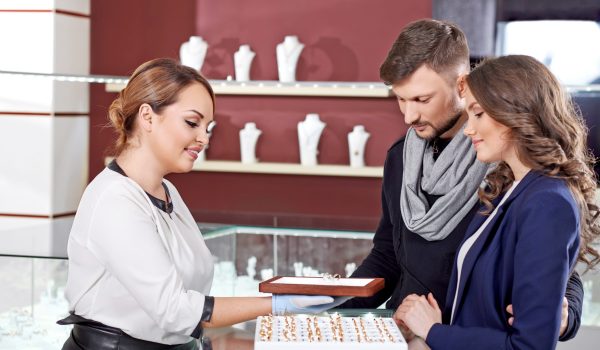
Specialist jewellers do not usually focus on the ring’s resale value. They focus on craftsmanship, setting quality, certification, and how easy it would be to replace the diamond if needed.
That’s why working with an experienced lab-grown diamond specialist matters from day one, not just at the point of sale. Reputable names like A Star Diamonds support customers with certification, transparency, and valuation documentation right from the start, and that paperwork is exactly what continues to matter years later, whenever you need to insure, revalue, or simply prove what you own.
Pawnbrokers, valuers, insurers, and jewellers each judge lab diamonds for different reasons, which is why their figures rarely match. A lower pawn offer doesn’t mean your diamond lacks value; it simply reflects a different purpose.
Keep your documentation up to date and get a professional valuation whenever you’re unsure. And if you’re still browsing for the best lab-grown diamond rings in London, UK, think about their future value and whether it can be properly insured.
Finding the right diamond store Hatton Garden has to offer is not always straightforward, even though
Choosing a white gold and diamond ring is one of the most meaningful decisions a person makes, whether
Picking a platinum engagement ring for couple shopping has quietly become one of the most exciting parts
Choosing a platinum diamond ring Hatton Garden buyers can rely on for years to come is not a decision
There is something quietly powerful about a platinum engagement ring. It carries a weight, both literal
Choosing a ring for the person you plan to spend your life with is one of the most meaningful decisions




Leave a comment